ServicesFleet Truck Insurance
Fleet Truck Insurance in Smyrna
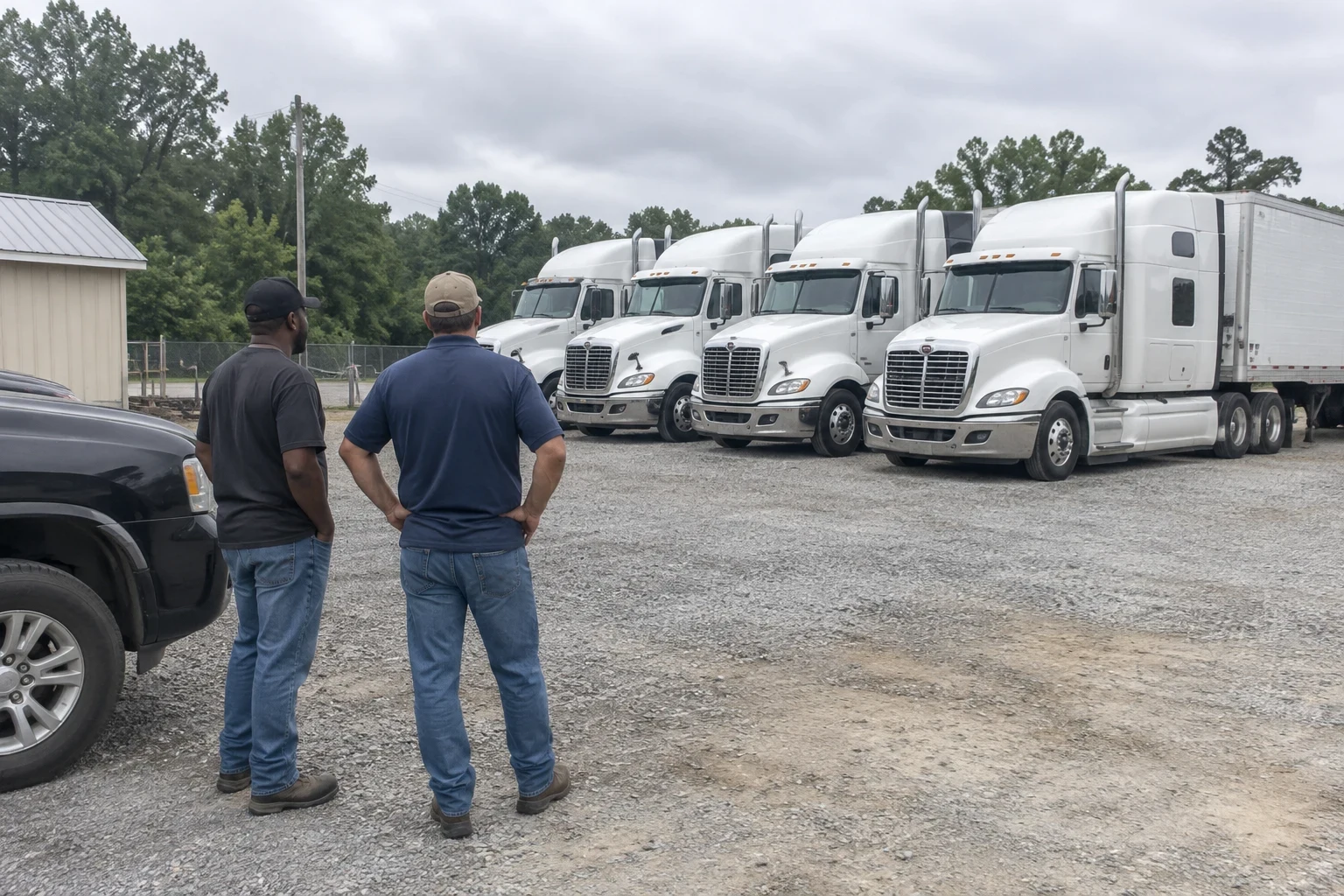
When you run several trucks, one weak driver file or a missing unit on the schedule can cost the whole operation. We build fleet coverage around your safety practices, line up liability, cargo and physical damage under one plan, and keep your filings current as trucks come and go.
What fleet coverage does for a growing operation
Fleet truck insurance is the package that covers a motor carrier running multiple power units under one DOT number. Instead of separate policies per truck, the units, trailers and drivers sit on one program with shared terms, one renewal date and one set of federal and state filings.
Carriers price a fleet on its loss history and its safety habits, not just the trucks. Underwriters pull your CSA BASIC scores, review motor vehicle records for every driver, and ask how you hire, train and monitor. A fleet that can show written driver qualification files, a dashcam or telematics program and a clean inspection history is a different risk than one that cannot, and the premium reflects that.
Our part is to present your operation accurately, explain each coverage line in plain terms, and keep the policy matched to what is actually on the road. For a single truck, our Owner-Operator Truck Insurance page is the better starting point.
What a fleet program usually includes
- Primary auto liability
- Covers bodily injury and property damage you cause to others, and carries the federal filing tied to your MC authority. On a fleet it is usually the largest line of the premium, so we spend the most time getting it right. Our Primary Auto Liability Insurance page covers it in more depth.
- Motor truck cargo
- Cargo coverage protects freight in your care against loss or damage. We check the policy's commodity list, reefer breakdown terms and unattended-vehicle exclusions against what your drivers actually haul.
- Physical damage on scheduled units
- Collision and comprehensive for each tractor, straight truck and owned trailer, listed by VIN with a stated value. Deductibles can be set per unit or across the fleet.
- Trailer interchange and non-owned trailers
- If you pull trailers under an interchange agreement, the damage to that equipment needs its own coverage. We read the agreement so the limit matches what you signed.
- Certificates and filings
- We issue certificates of insurance to shippers, brokers and lessors, and keep the federal and Georgia filings in step with your DOT number and MC authority.
Signs your fleet has outgrown its current coverage
Trucks added by phone and never confirmed
A unit that was never added by endorsement may have no physical damage coverage. A schedule that does not match your equipment list is the most common gap we find.
Drivers hired faster than files are built
If a new driver is running loads before the carrier has approved their MVR, a loss involving that driver can turn into a coverage dispute.
Renewals that jump with no explanation
A large increase usually traces to a specific claim, a rising CSA score or a driver with recent violations. You should know which one, because each has a different fix.
Brokers rejecting your certificate
When brokers ask for higher cargo limits or specific endorsements you do not carry, you lose loads. That is a sign the program was built for a smaller operation.
Separate policies with different dates
Trucks spread across several policies mean multiple renewals, mismatched limits and gaps between them.
How we put a fleet program together
- 1
Gather the operation's records
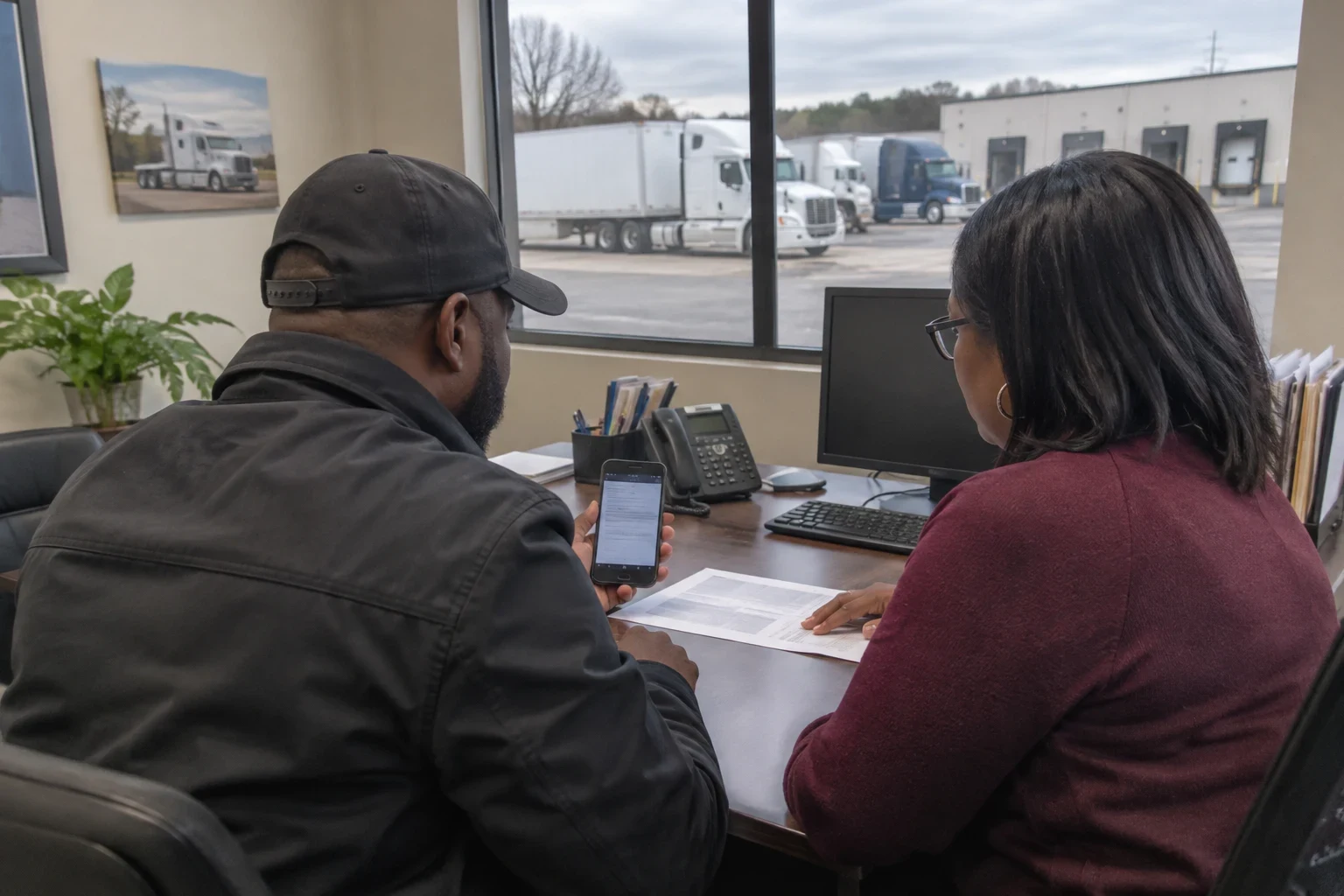
We ask for your equipment list with VINs and values, driver roster with license details, three to five years of loss runs, and your radius and commodities. You can share these at our office or by phone and video.
- 2
Review the safety side first
Before any quote goes out, we look at your CSA scores, inspection history and driver MVRs with you. If one driver or one unit is driving the cost, we point it out so you can decide what to do about it.
- 3
Market the account and compare
We present the fleet to carriers that write commercial trucking and lay the quotes side by side: limits, deductibles, exclusions and premium, line by line.
- 4
Bind, file and issue certificates
Once you choose, we bind coverage, complete the required filings and send certificates to the brokers and shippers you work with.
- 5
Keep the schedule current
As units and drivers change, we process endorsements so the policy keeps matching what is on the road.
What drives the premium on a fleet
Fleet pricing is built from the risk each unit and driver adds, then adjusted for how the operation manages that risk. There is no flat rate per truck. We explain which factors are moving your number so you can see where safety work pays off.
- Loss history
- Carriers weigh the frequency and severity of past claims heavily. Several small claims can hurt as much as one large one, because they suggest a pattern.
- Driver records and experience
- Each driver's violations, accidents and years of commercial driving feed the rate. One driver with serious violations can raise the cost for the whole fleet.
- Radius, routes and commodities
- Long-haul miles, dense corridors like the interstates around Smyrna, and high-value or hazardous freight all carry more exposure than short local runs with general freight.
- Equipment values and deductibles
- Newer, higher-value units cost more to cover for physical damage. Higher deductibles lower the premium but raise what you pay per claim.
- Safety program and technology
- Written hiring standards, regular training, and dashcams or telematics give underwriters evidence your drivers are managed. Some carriers give credit for these, and we make sure they see it.
Fleet insurance questions we hear often
Something not covered here? (770) 637-6657
How many trucks does it take before carriers treat us as a fleet?
There is no single cutoff, and some carriers open fleet programs at just a few power units. What matters more is that every unit runs under your authority and sits on one program. Once we see your equipment list, we can tell you which structure fits.
We just bought another tractor. How do we get it on the policy before it hauls?
The new unit goes on by endorsement, and the premium is prorated for the months left before renewal. Phone us before that truck takes its first load. Protection starts when the carrier confirms the endorsement, not on the day the bill of sale is signed.
Does one driver's bad record affect the whole fleet?
It can. Carriers rate the driver roster as a whole, and some will exclude a driver outright. We review MVRs before you hire when possible so you know the effect up front.
Will a dashcam program lower my premium?
Not automatically. Some carriers credit it, and footage often helps settle disputed claims quickly. We include your program details in every submission so underwriters can weigh it.
What do I need to send for a quote?
Your DOT number, an equipment list with VINs and values, a driver roster with each driver's date of birth and years of commercial experience, loss runs from your current carrier, and a description of your routes and freight. Missing loss runs cause the most delays, so ask your current carrier for them early.
Get your fleet's coverage matched to how you run
Bring your equipment list and driver roster to the call. We will go through your safety record, your current policy and where the gaps are, then shop the account.